Game Narrative Portfolio — 8 Weeks

Otumno

A Dark Medieval Fantasy Narrative Experience

In the shadow of King Kaffar's corrupted throne, Dimas fights not for glory, but for his own soul.

Unreal Engine 3D Action Adventure / PvE Concept Portfolio AAA-mentored
Back to portfolio

Act I — Project

The full narrative design process,
start to finish

This concept portfolio documents the complete narrative design process for Otumno, a dark medieval fantasy ARPG where every choice echoes through a corrupted kingdom. Built under AAA industry mentorship over 8 weeks, covering research, documentation, and deliverables for cross-functional team use.

Engine

Unreal Engine

Genre

3D Action Adventure / PvE

Type

Quest

Duration

8 Weeks

Tools

Arcweave, Sheets/Excel, PPT/Slides, Miro

By the numbers

What was built

150+ character barks. 38 dialogue nodes. 6 quest endings. 4 fully documented locations. Every deliverable formatted for art teams, design teams, and VO studios.

150+

Character Barks

Across 4 playable characters, each with distinct voice and Jungian archetype.

38

Dialogue Nodes

6 unique quest endings. Each node responds to player history and faction standing.

8

Weeks

From concept to complete documentation under AAA industry mentorship.

4

Locations

Each designed with 20+ reference images for the art team.

150+ Character Barks 38 Dialogue Nodes 6 Quest Endings 8 Weeks 150+ Character Barks 38 Dialogue Nodes 6 Quest Endings 8 Weeks

What I did

End-to-end narrative design

Characters built from Jungian archetypes. Dialogue designed for player agency. Locations built for both story and gameplay function. Every deliverable formatted for team handoff.
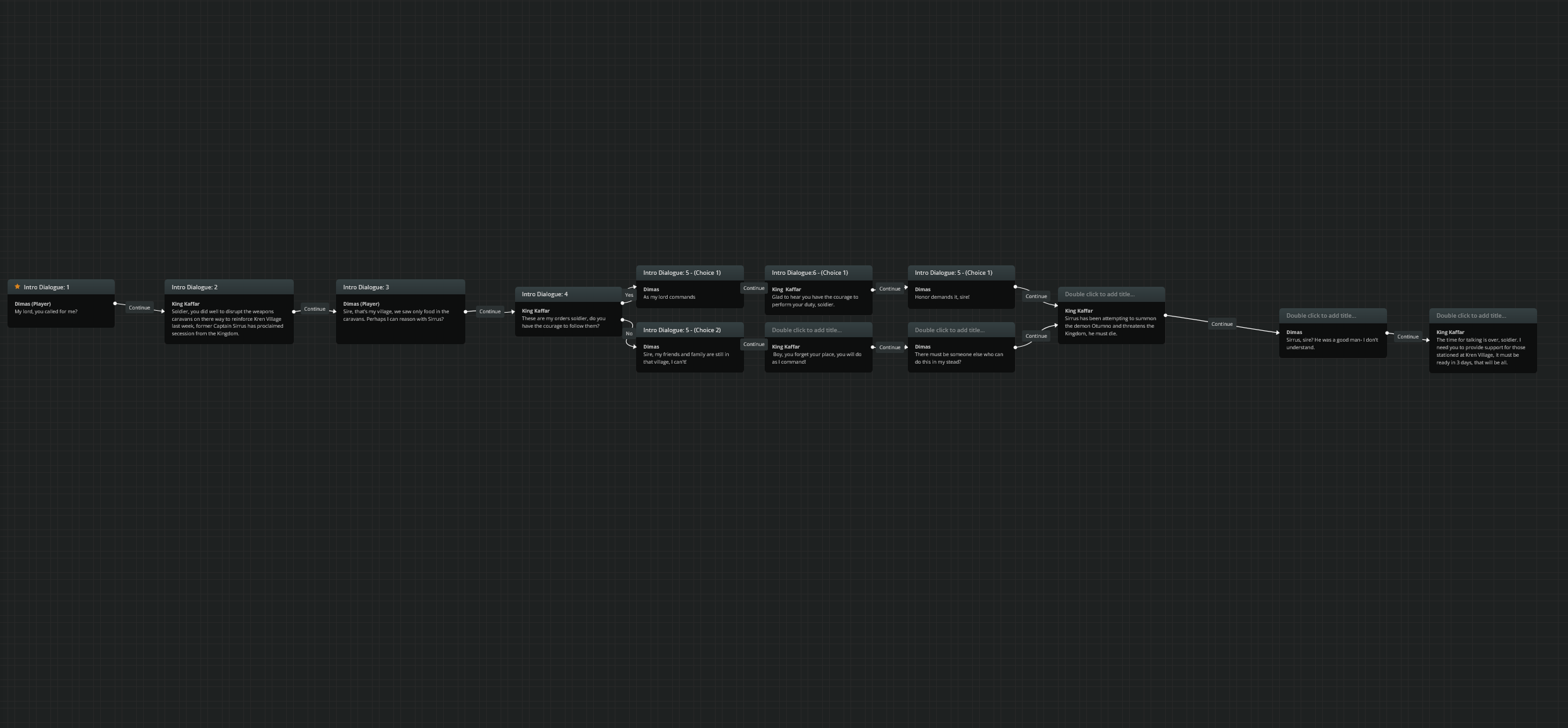
Quest branching dialogue in Arcweave

Quest branching dialogue writing, design, and implementation
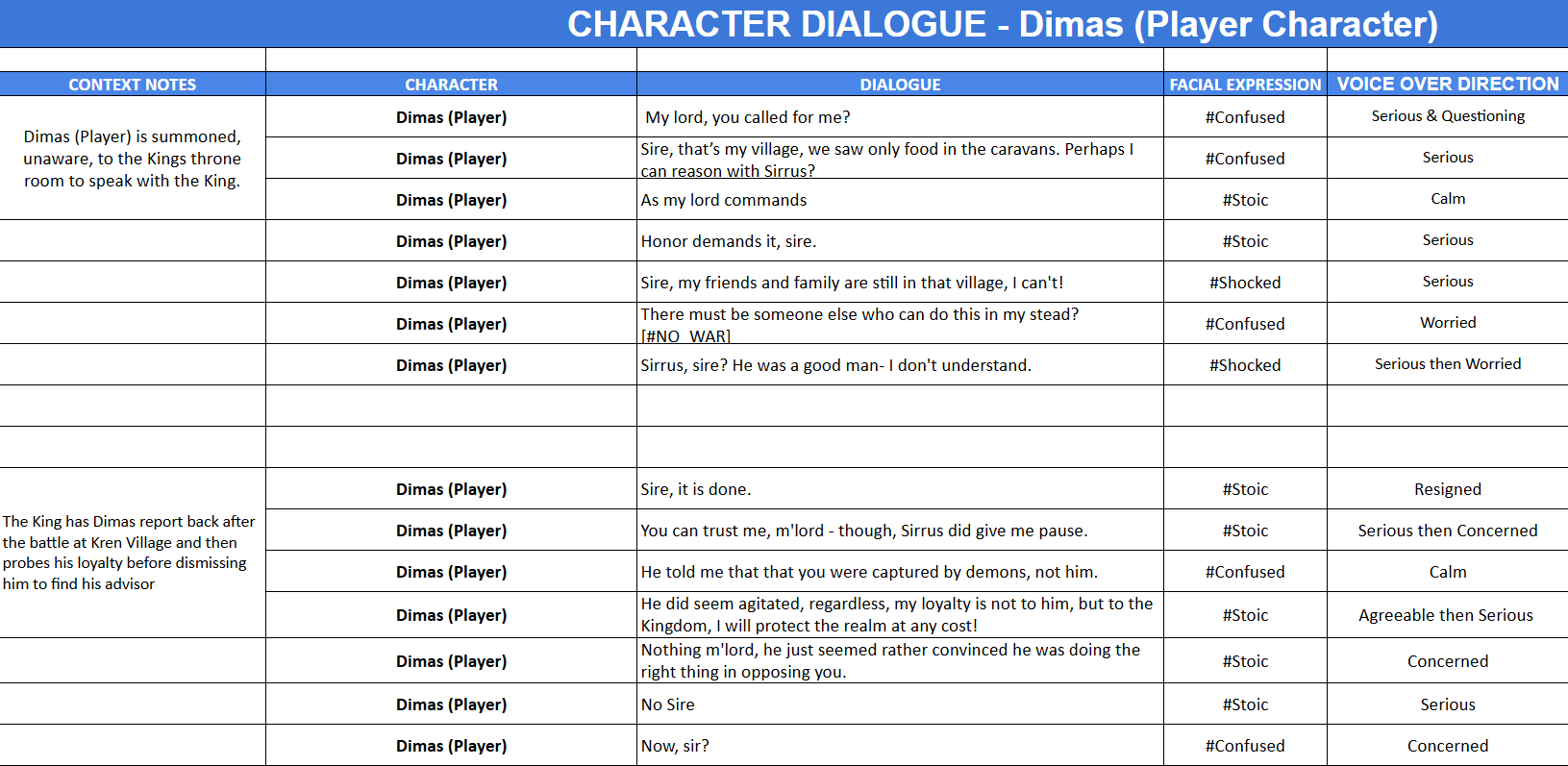
Dimas VO script

Character bios, barks, and voice-over scripts
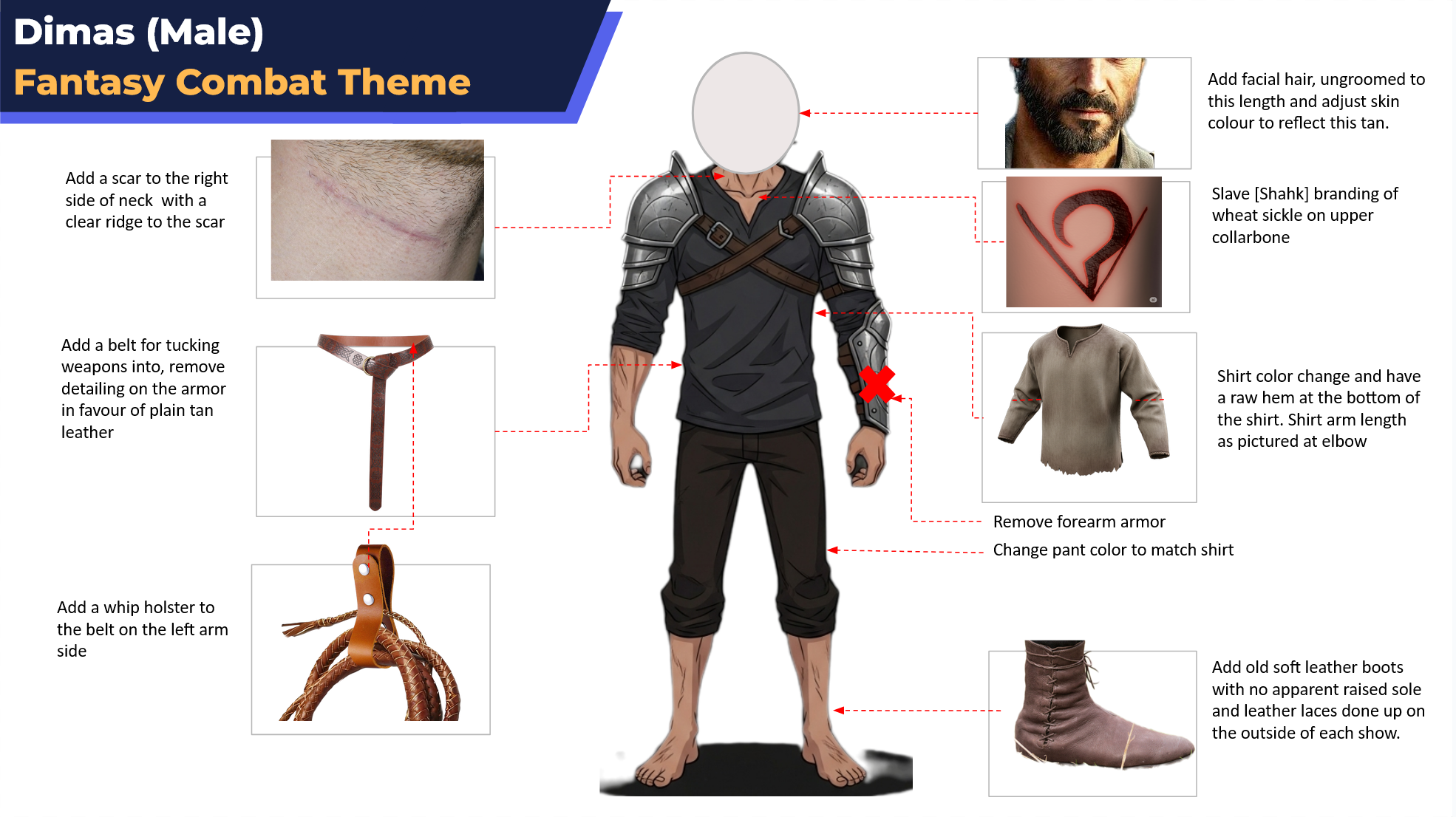
Character design documentation

Character design (archetypes, weapons, combat)

Location design worksheet

Location and building design

World building worksheet

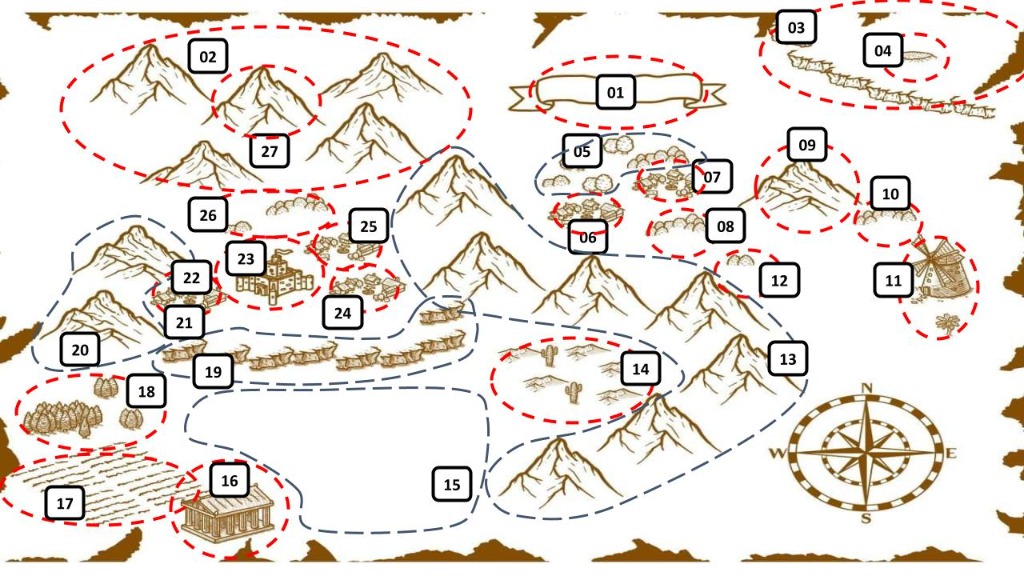
World-building and game cartography

Storyboard panel

Storyboarding and script design

Act III — Characters

Four characters.
Four archetypes.

Each character is built from a Jungian archetype. Their barks, bios, and design documents are formatted for voice acting and animation teams. Combat function and character personality are inseparable — that's the design constraint.

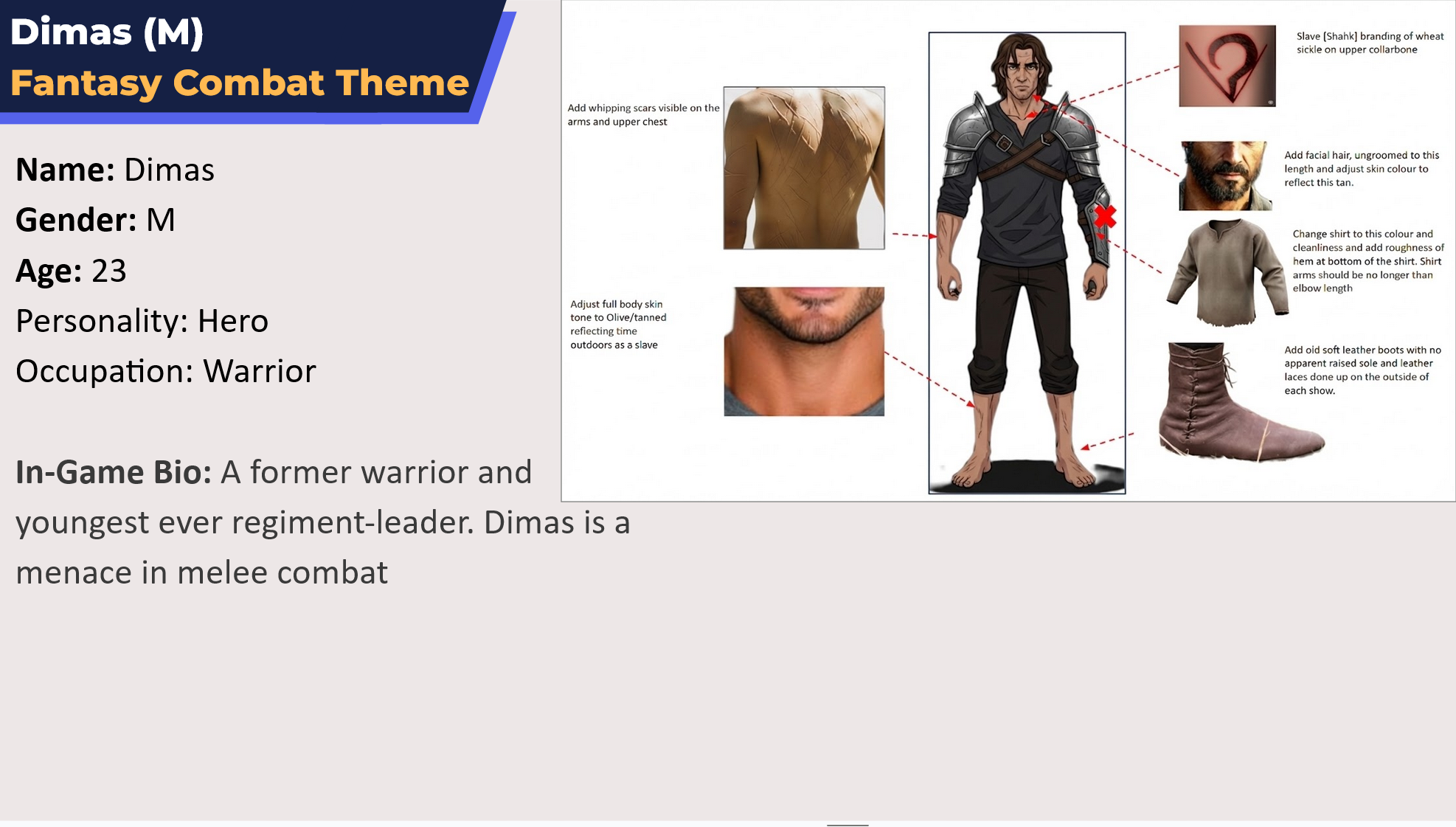
Dimas character design

Tragic Hero — Age 23

Dimas

The Fallen Soldier

A former regiment leader turned slave. Once the King's most trusted captain, Dimas discovered the dark pact that fuels Kaffar's conquest. Branded a traitor, he fights to expose the truth, even if it costs him everything.

  • Dual combat identity: trained soldier precision vs desperate survivor brutality
  • Character arc mirrors player's moral choices throughout the game
  • Voice lines shift from confident commands to hardened survival instincts

Weapon:Scourge Whip & Sickle — slave farm tools repurposed for lethal mid-range combat.

Goddek character design

Mentor Figure

Goddek

The Reluctant Healer

Stoic, moral, wise. A mage with healing skills. She aids Dimas not out of loyalty to any cause, but because she cannot stand idle while the world corrupts around her.

  • Combat healing creates strategic depth and player dependency
  • Medical-themed barks ('Time of death: 11:24pm') add dark humour
  • Staff and scalpel combo reflects healer-turned-fighter progression

Weapon:Koru Staff & Scalpel — emerald-caged healing staff and surgical scalpel.

King Kaffar character design

Shadow Tyrant — Age 55

King Kaffar

The Corrupted Ruler

Power hungry and in thrall to dark magic. His corruption spreads like a plague across the land, and only those closest to him know the true cost of his reign.

  • Boss mechanics tie into his narrative of consuming power at any cost
  • Barks reveal philosophical narcissism ('Kings die, but gods live forever')
  • Visual corruption in armour design mirrors his spiritual decay

Weapon:Blood Oath Sword — boss moveset: Slash, Stab, and Otumno's Scepter defense.

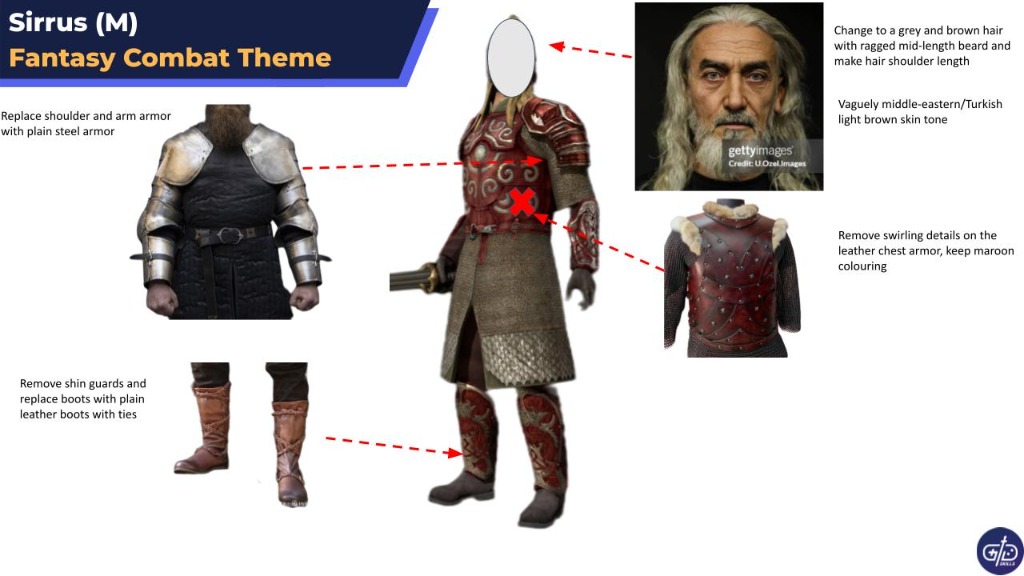
Sirrus character design

Apparent Antagonist — Age 48

Sirrus

The Village Leader

Loyal, brave, and confident with a strict moral code. Former Captain of the Kaffar Army and now Village Leader. Ordained into leadership from a young age, pitted against the Kingdom, leaving the King with a dangerous decision.

  • Player choice determines whether they are forced or go willingly against the 'usurper'
  • King Kaffar accuses Sirrus of courting demons — while Sirrus accuses the King
  • Player must uncover the truth: is their village leader a madman?

Weapons:Captain's Broadsword (two-handed, gold accents) & Soldier's Bow with leather quiver.

Act II — Storyboard

Visualising the opening sequence

From the siege of the castle to the ritual's dark twist. Each shot is designed to establish mood, character, and the central conflict, for collaboration with art and marketing teams.

01

Worldbuilding Integration

Designed shots with worldbuilding in mind. The sequence functions as an intro cinematic leading into character creation.

02

Art Team Collaboration

Included clear location, camera view, and action for use by the art team.

03

Character-Centric POV

Written in the POV of the main character to maintain continuity with the character-centric narrative.

04

Efficient Communication

Simple assets designed for quick and efficient communication between teams.

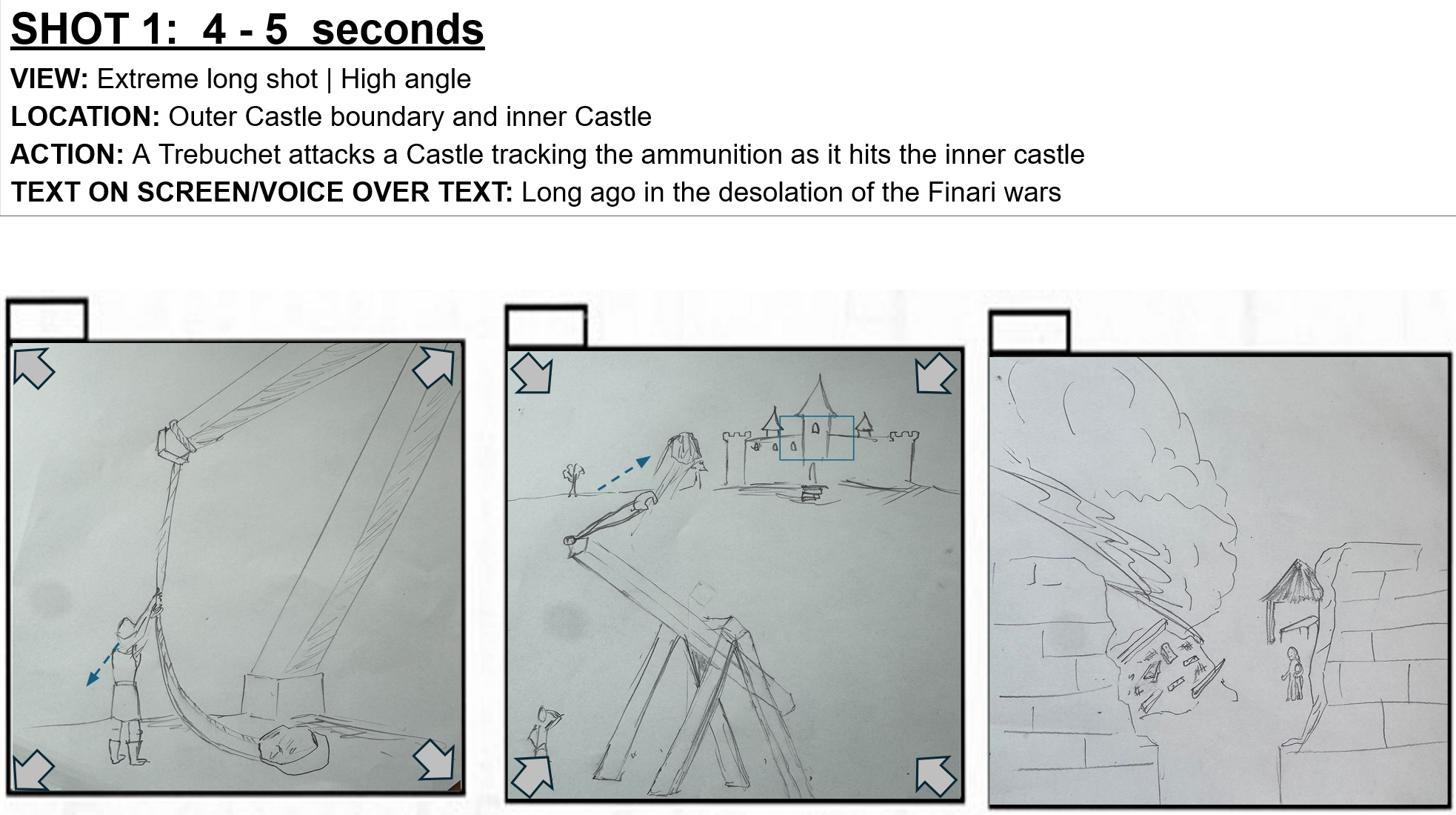
Shot 1 — The Siege

Shot 1

The Siege

Opening Sequence

Extreme long shot of a Trebuchet attacking the castle walls.

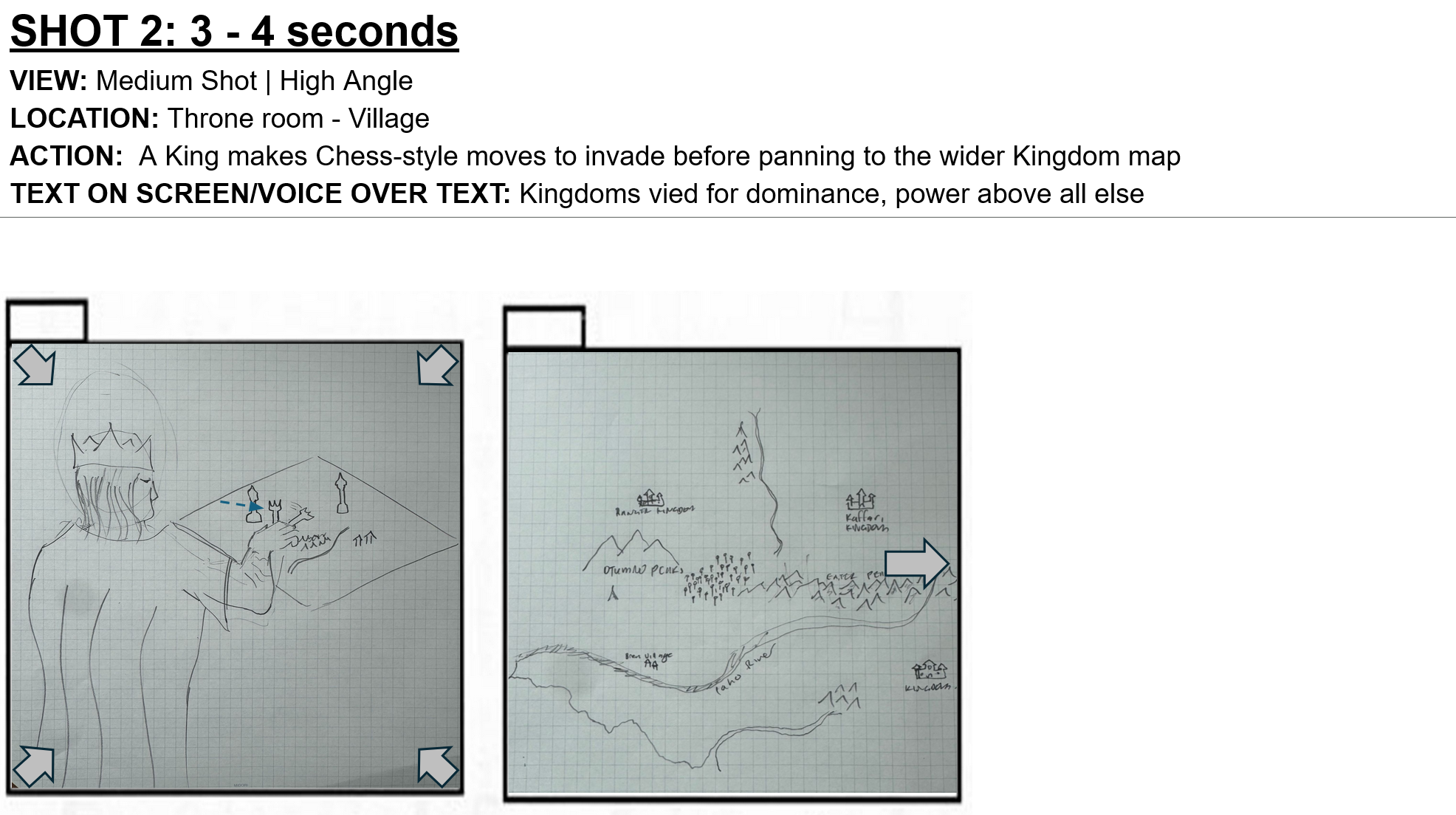
Shot 2 — The Map

Shot 2

The Map

Exposition

King Kaffar plotting invasion on a tactical map.

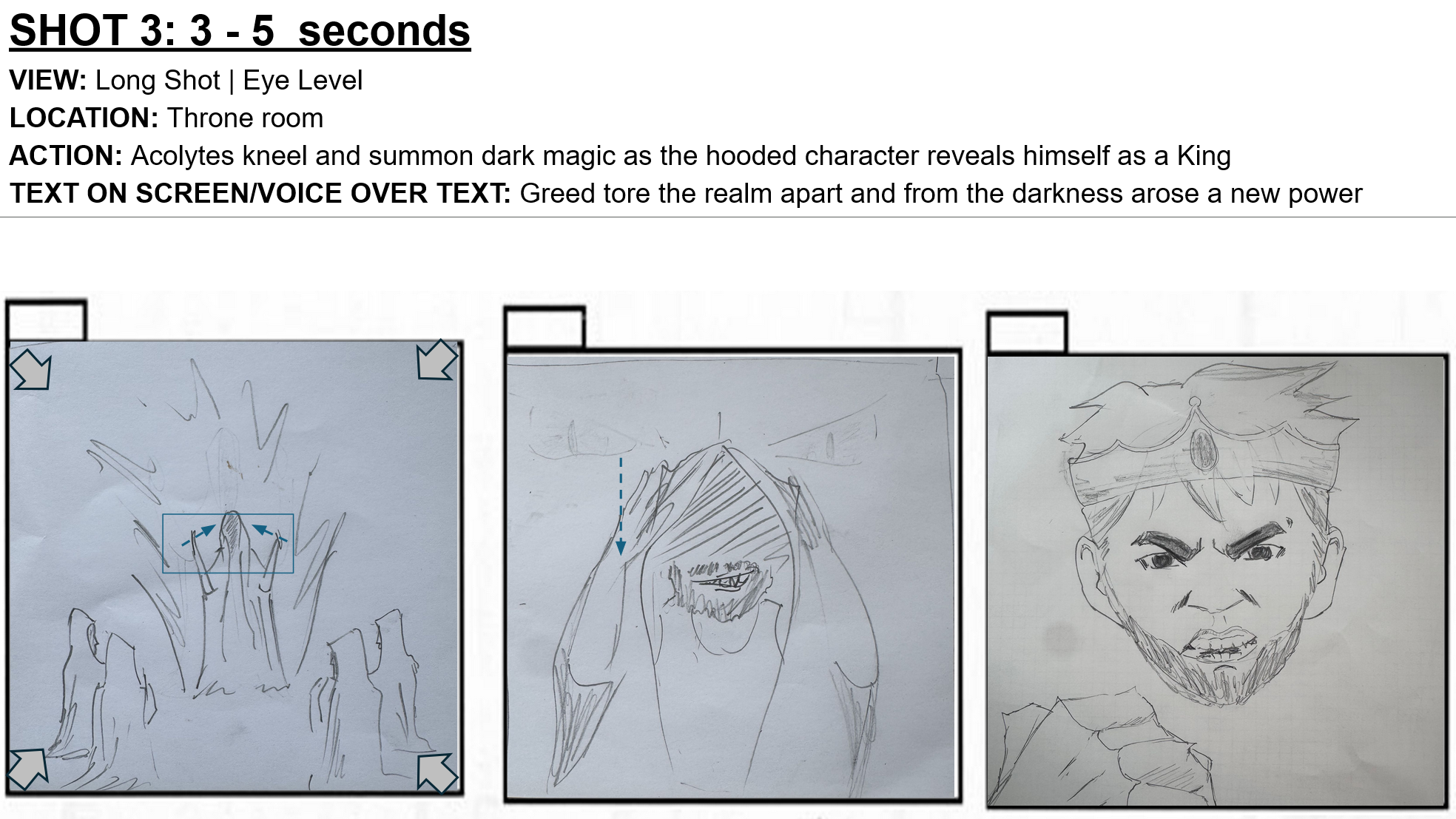
Shot 3 — The Reveal

Shot 3

The Reveal

Inciting Incident

Acolytes summoning dark magic in the Throne Room.

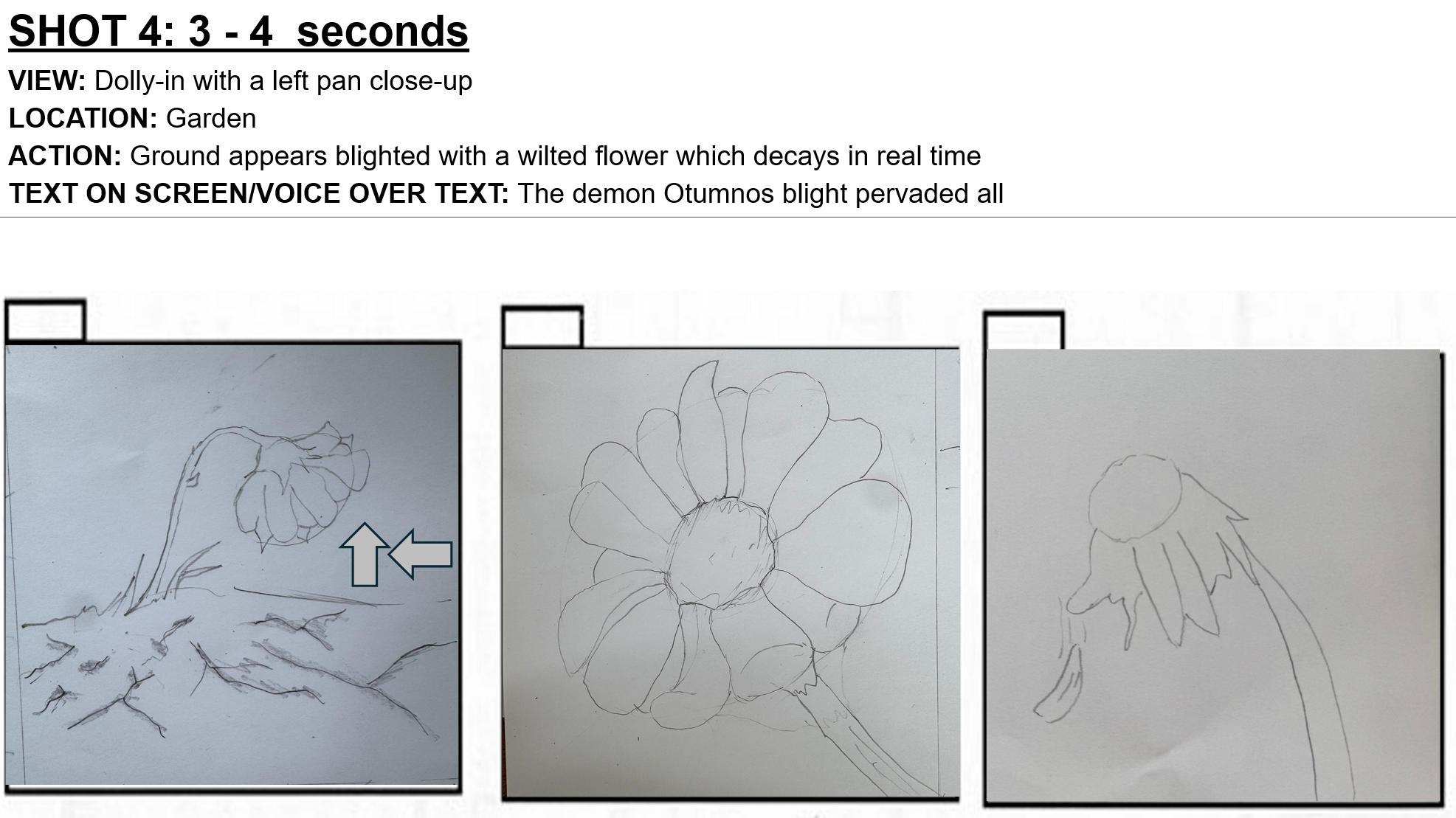
Shot 4 — The Blight

Shot 4

The Blight

Environmental Storytelling

Corruption decaying a flower in real-time.

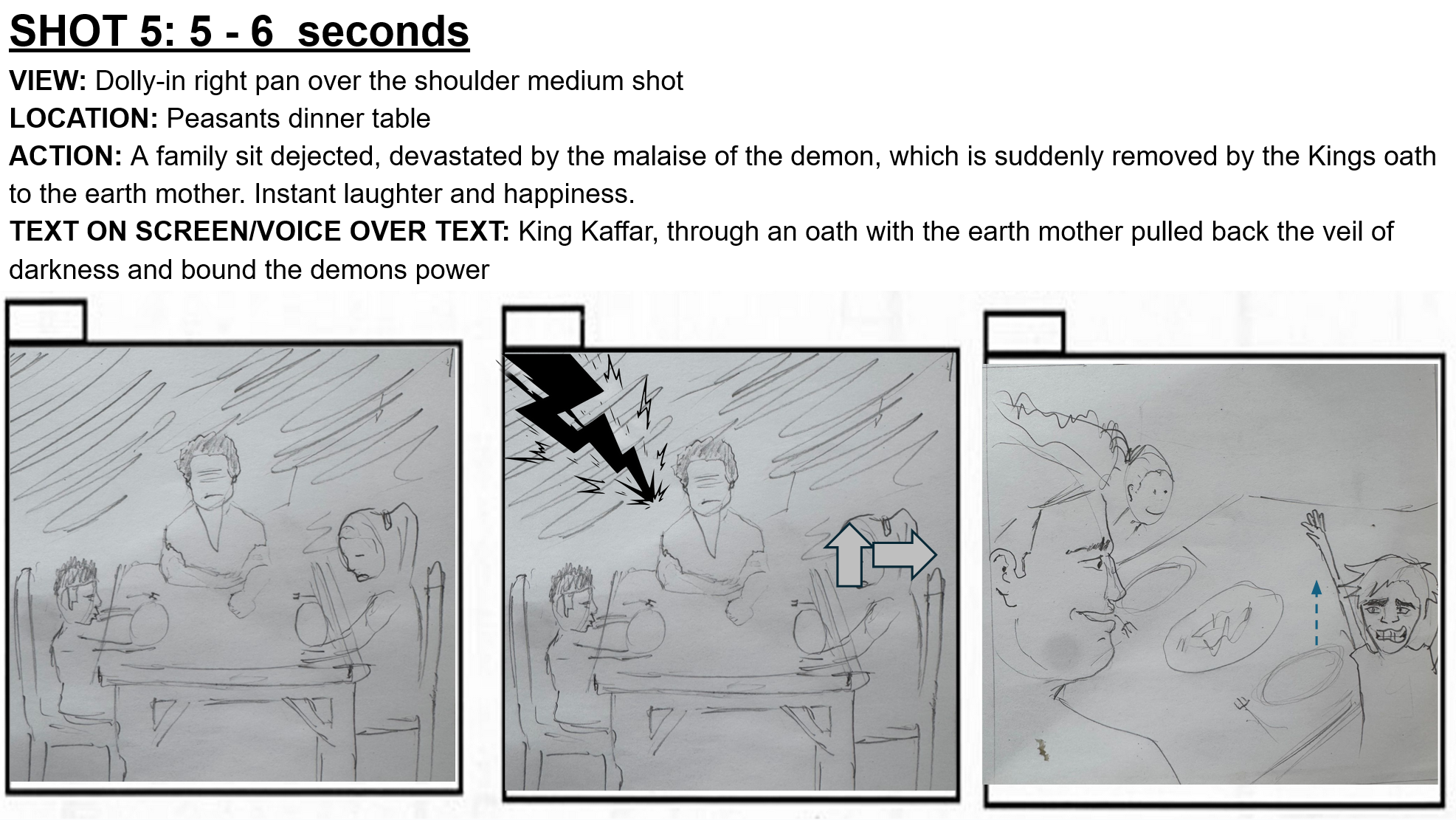
Shot 5 — The Lie

Shot 5

The Lie

Narrative Irony

Peasants rejoicing, unaware of the King's dark pact.

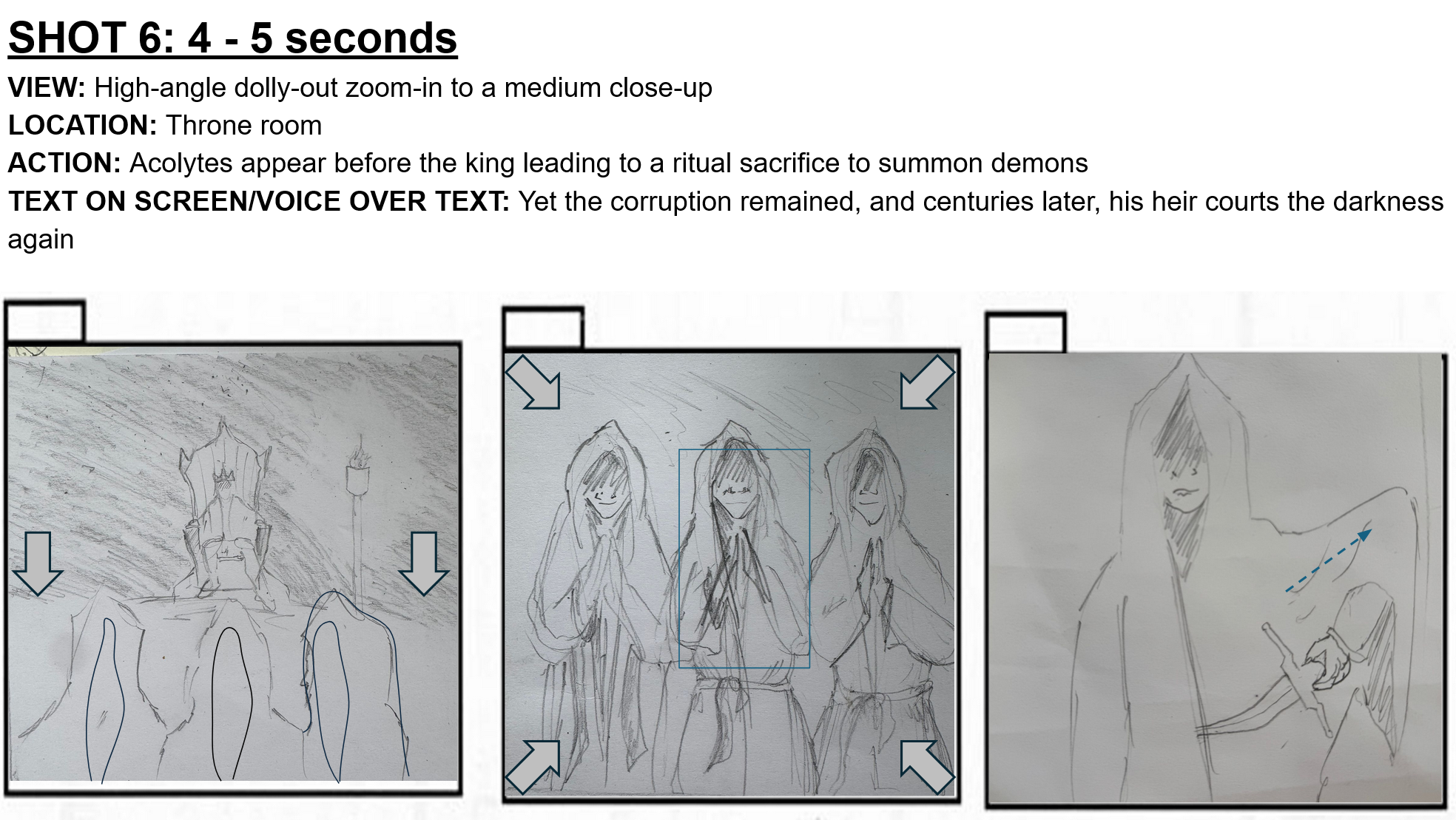
Shot 6 — The Ritual

Shot 6

The Ritual

The Twist

The heir courts the darkness again.

Act IV — The World

The Kaffari Kingdom

Every location in Otumno carries narrative weight. The corrupted castle halls, the struggling villages, the cursed landscape: each is designed to tell the story without dialogue.

World Lore

The Kaffari Kingdom

Once a prosperous realm, Otumno fell into darkness when King Kaffar made a pact with entities beyond mortal understanding.

Now the land itself rots — flowers wilt at the touch, water turns brackish, and the sun seems dimmer with each passing day.

The common folk whisper of a curse, but only those who stood in the throne room that fateful night know the truth.

Corruption & Redemption Cost of Power Truth vs. Perception Individual vs. Kingdom
Kaffar Castle Town

Exterior

Kaffar Castle Town

The bustling settlement in the shadow of the castle.

Kaffar Castle

Exterior

Kaffar Castle

Main enemy stronghold. Dark Medieval Fantasy style.

Molten and Sons Blacksmith

Exterior

Molten & Sons Blacksmith

Blacksmith for weapon upgrades and purchases.

Healing Tent

Interior

Healing Tent

A place of respite and recovery. Healing, Mana & Potions marketplace.

World building cartography

Act V — Dialogue

Linear and branching dialogue

Every dialogue node in Arcweave responds to player history, faction standing, and previous choices. Player agency is structural, not cosmetic. No conversation exists in isolation.

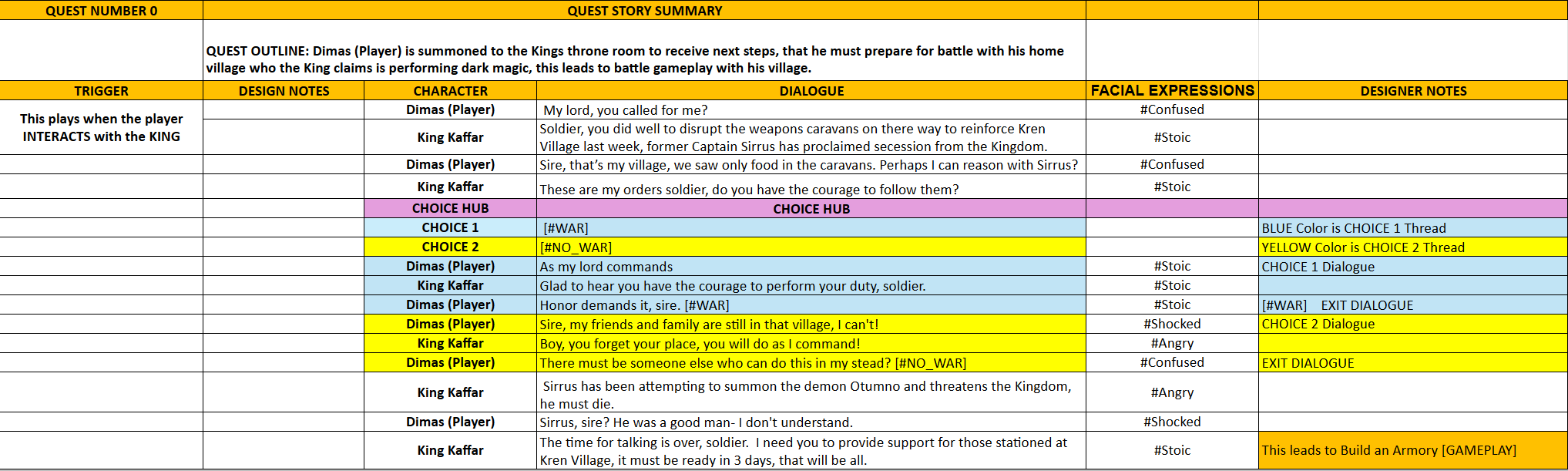
Quest design documentation

Quest Design

Each quest begins with a clear objective but offers multiple paths to resolution. Player choice impacts both immediate outcomes and long-term relationships.

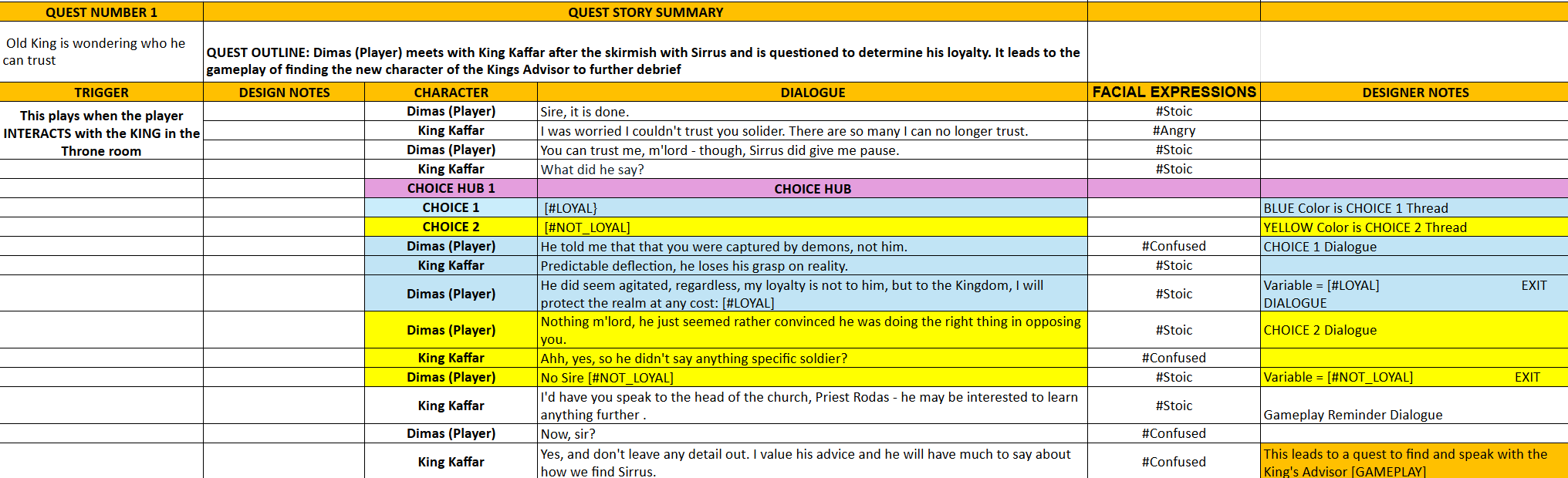
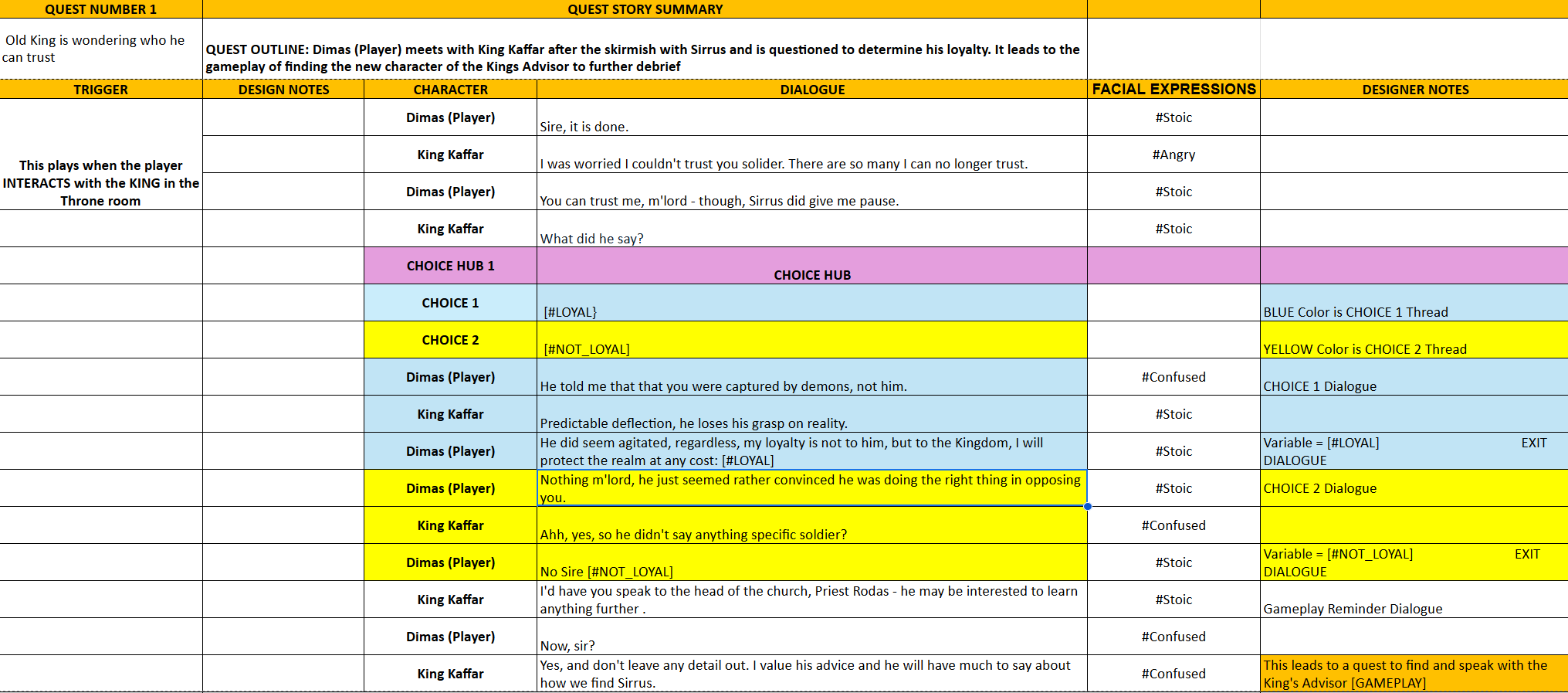
Branching dialogue logic

Branching Logic

Using Arcweave, dialogue trees respond to player history, faction standing, and previous choices. No conversation exists in isolation.

Character voice documentation

Character Voice

Each character has a distinct voice derived from their background, archetype, and relationship to the central conflict.

Arcweave dialogue tree

Arcweave Implementation

38 dialogue nodes built in Arcweave, fully connected with conditional logic and player-state variables.

Design foundations

Influences & methodology

Character construction, world design, and player agency each draw from a consistent set of frameworks rather than intuition alone.

Narrative Influences

  • Dark Souls series (environmental storytelling)
  • The Witcher (moral ambiguity)
  • A Song of Ice and Fire (political intrigue)

Design Methodology

  • Jungian archetypes for character construction
  • Hero's Journey structure adaptation
  • Branching narrative frameworks

Narrative design for games

Building worlds that need voices

If you're making games and need structured narrative deliverables, get in touch.

Back to portfolio