Opening Sequence
The Siege
Extreme long shot of a Trebuchet attacking the castle walls.
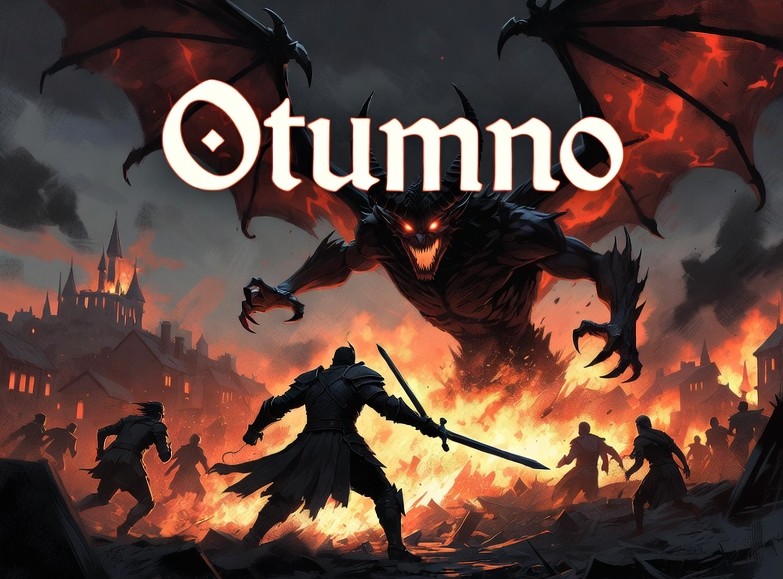
A Dark Medieval Fantasy Narrative Experience
In the shadow of King Kaffar's corrupted throne, Dimas fights not for glory, but for his own soul.
This concept portfolio documents my narrative design process for Otumno—a dark medieval fantasy ARPG where every choice echoes through a corrupted kingdom.
.jpg)
Build a narrative-focused project beginning with research and finishing with documentation tailored for team collaboration.
Create branching and linear dialogue that is congruent with the characters and seamlessly leads to gameplay.
Create clear and digestible character, location, and script materials for art and design teams and team collaboration.
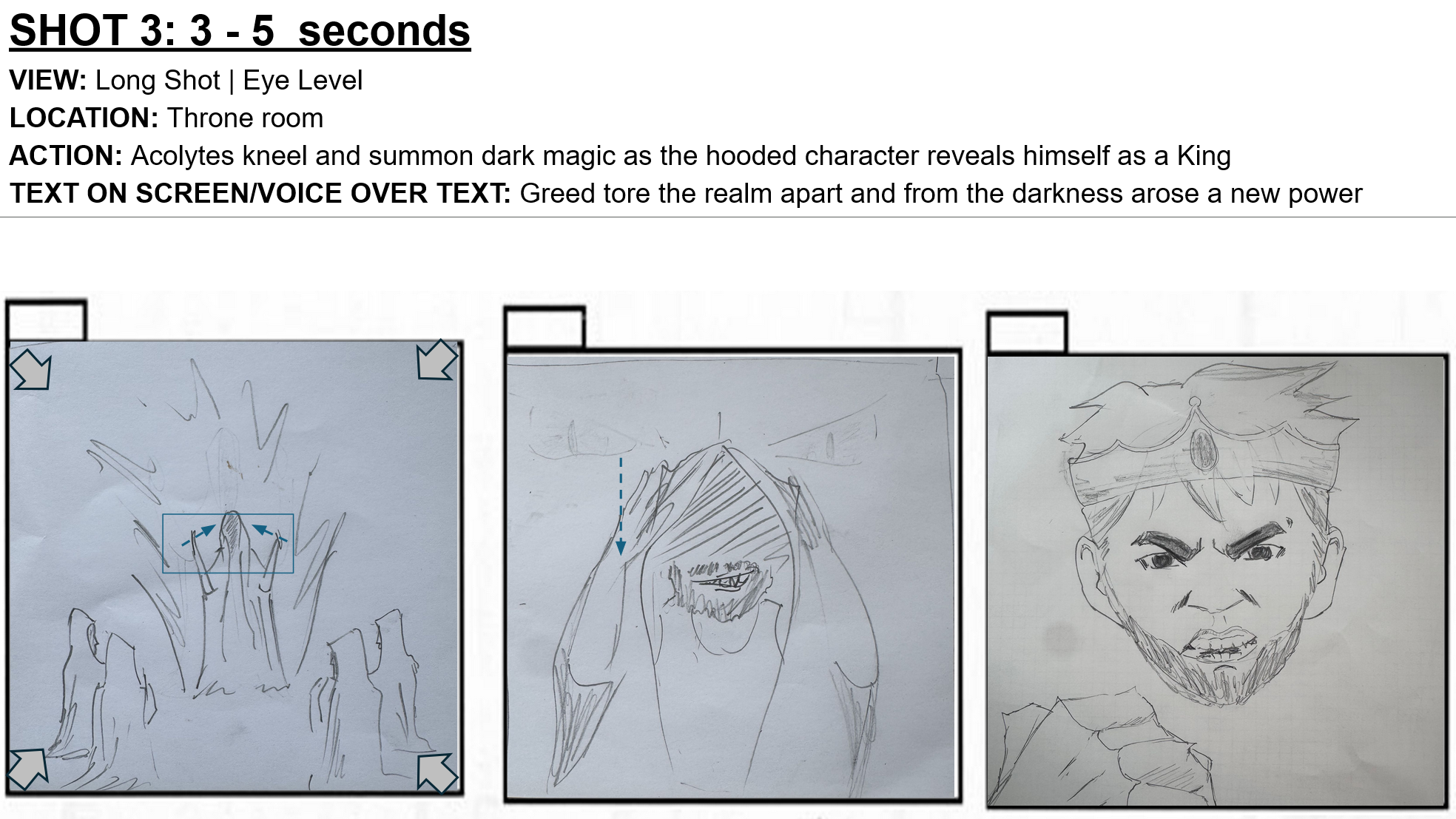
Visualizing the opening sequence: from the siege of the castle to the ritual's dark twist. Each shot designed to establish mood, character, and the central conflict to collaborate with the art and marketing teams.
Designed shots with worldbuilding in mind, creating a sequence that can be used as the intro cinematic leading into character creation.
Included clear location, camera view, and action for use by the art team.
Wrote text in the POV of the main character to maintain continuity with the character-centric narrative of the game.
Designed a storyboard prototype with simple assets for quick and efficient communication between teams.
Extreme long shot of a Trebuchet attacking the castle walls.
King Kaffar plotting invasion on a tactical map.
Acolytes summoning dark magic in the Throne Room.
Corruption decaying a flower in real-time.
Peasants rejoicing, unaware of the King's dark pact.
The heir courts the darkness again.
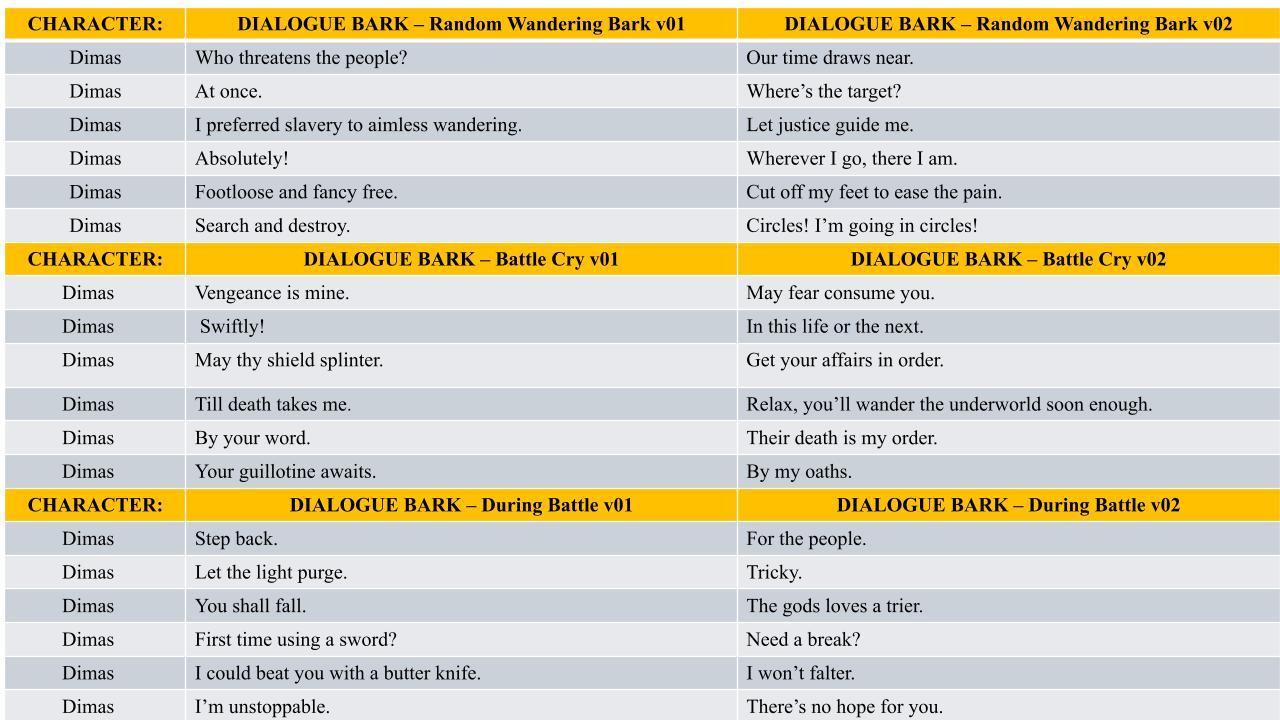
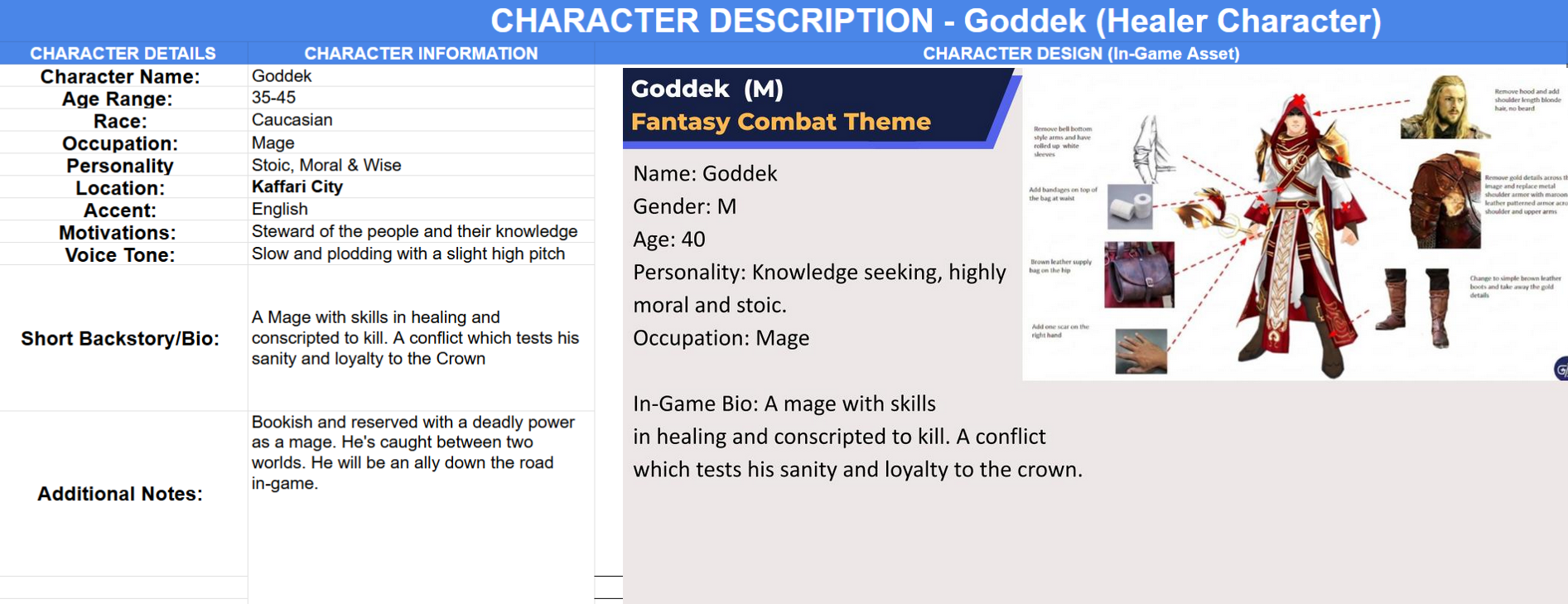
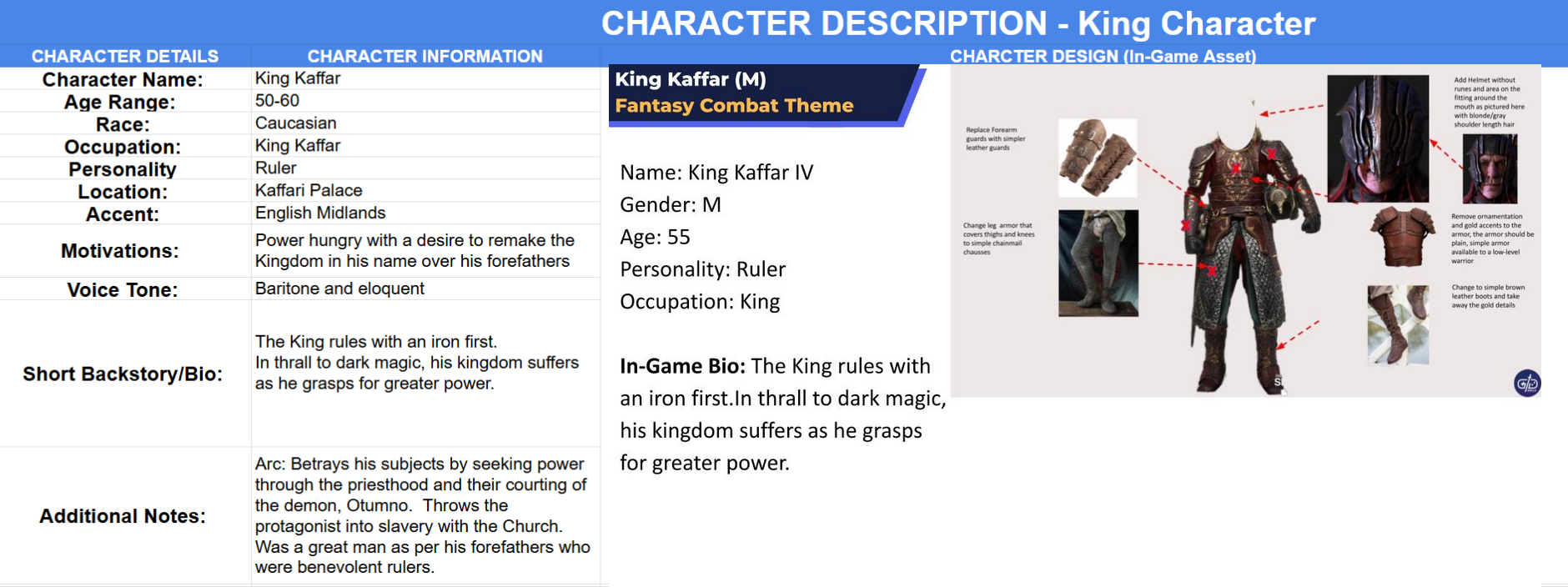
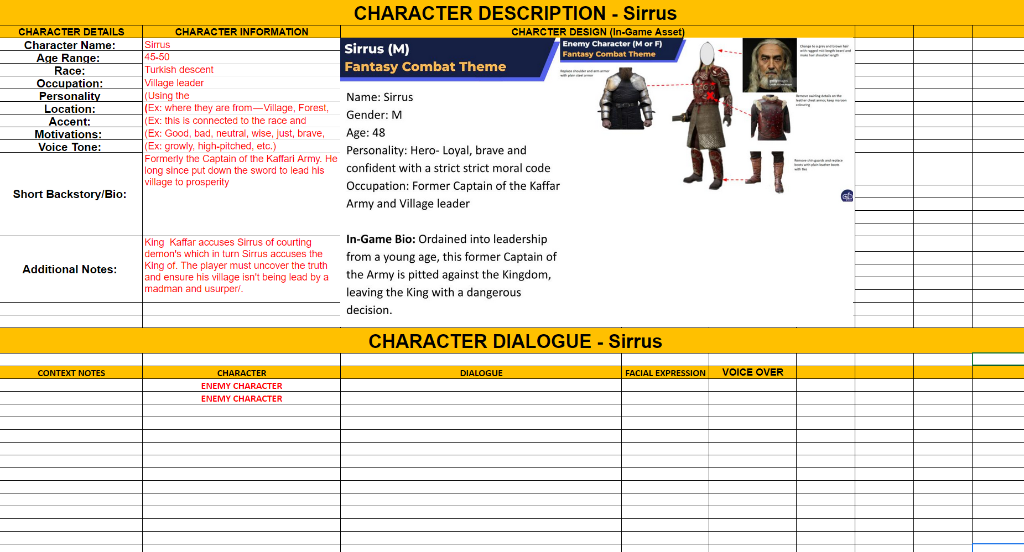
Characters built from Jungian archetypes, each carrying their own narrative weight. Their barks, bios, and design documents create a foundation for voice acting and animation teams.
Researched, designed, and fleshed out character motivations and personality to reflect narrative themes, combat functions, and game mechanics.
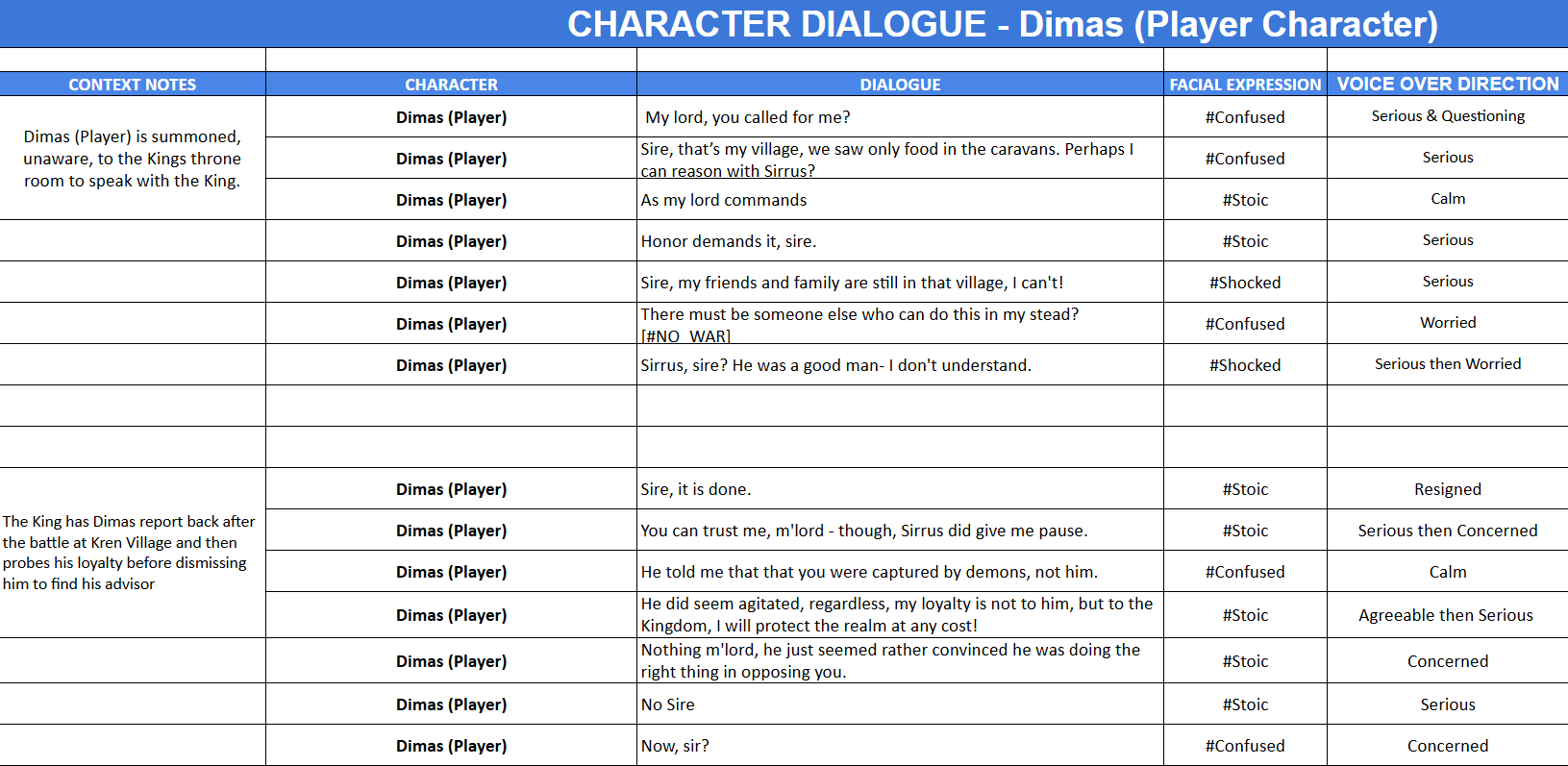
Wrote the character bio and gameplay barks using their design, combat function, and Jungian personality archetypes in mind.
Designed unique weapons and attacks for each character, as well as named and described their attacks (with GIFs), in support of Combat Design.
Polished the characters' personalities, bios, and barks based on the finished character designs.
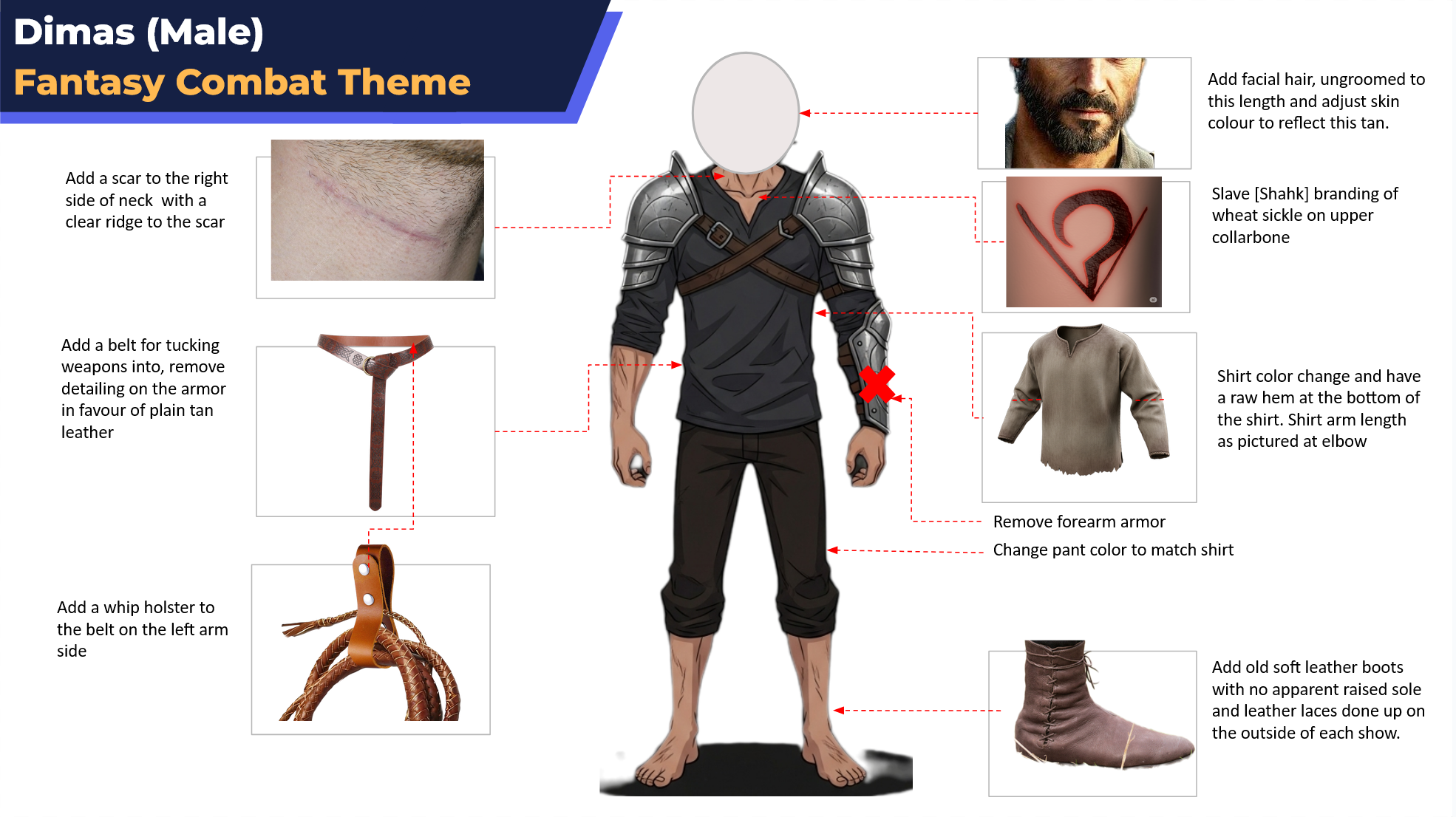
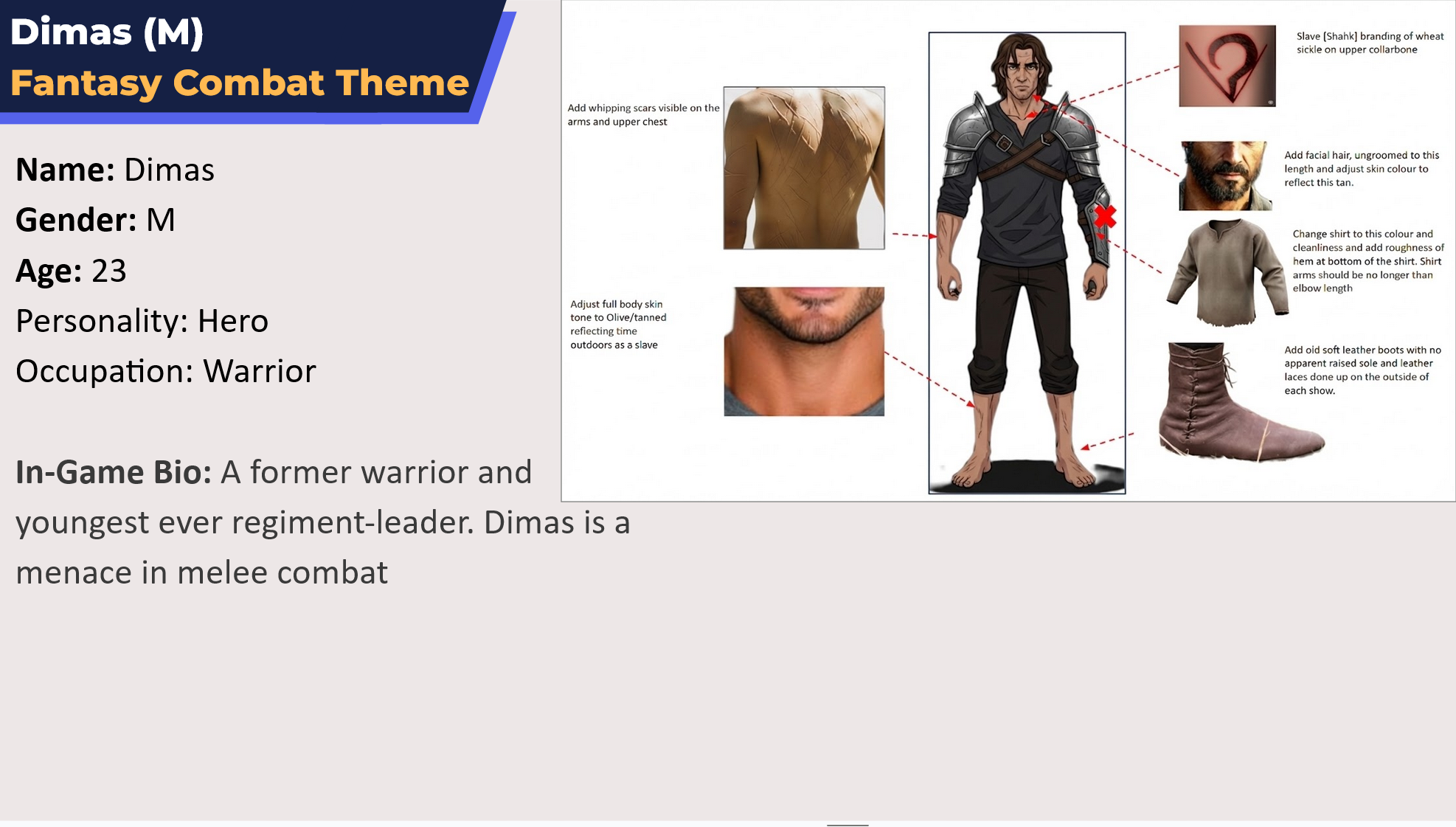
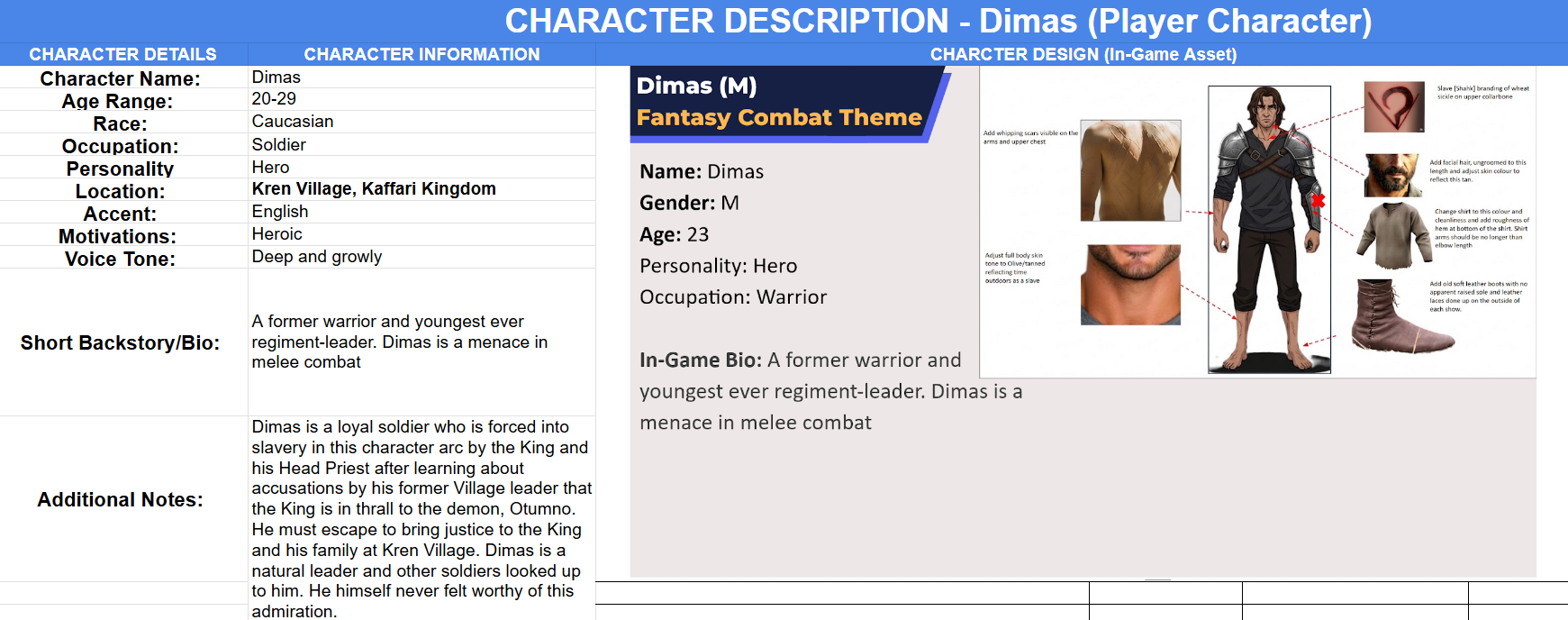
Dimas serves as the player's avatar through a world of moral ambiguity. His dual combat styles—soldier and slave—reflect his journey from loyal captain to outcast survivor.
The Fallen Soldier
Age 23. A former regiment leader turned slave. Once the King's most trusted captain, Dimas discovered the dark pact that fuels Kaffar's conquest. Branded a traitor, he fights to expose the truth—even if it costs him everything.
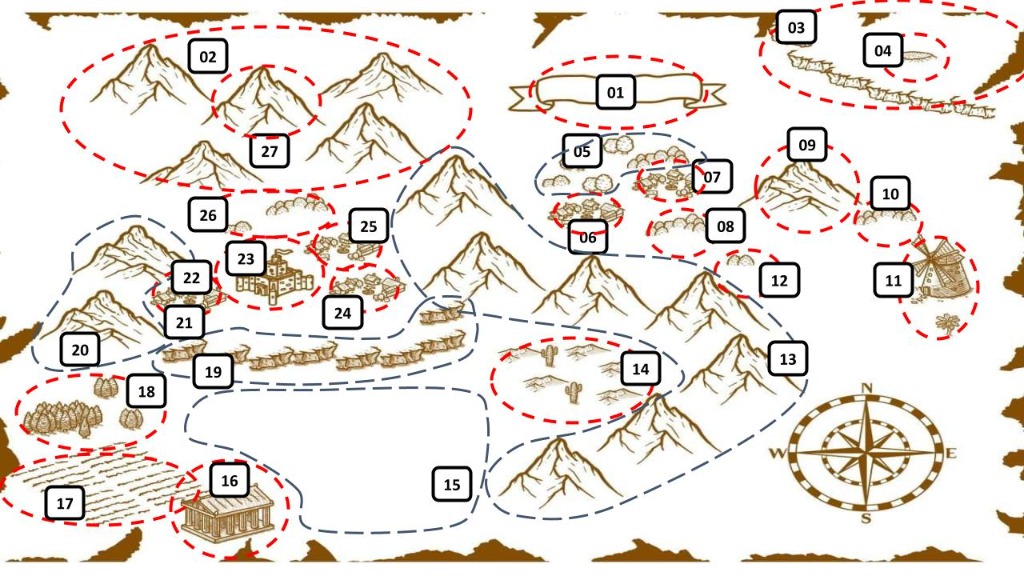
Every corner of Otumno tells a story. From the corrupted castle halls to the struggling villages beyond its walls, the environment is a character unto itself.
Once a prosperous realm, Otumno fell into darkness when King Kaffar made a pact with entities beyond mortal understanding.
Now the land itself rots—flowers wilt at the touch, water turns brackish, and the sun seems dimmer with each passing day.
The common folk whisper of a curse, but only those who stood in the throne room that fateful night know the truth.
Dialogue systems that feel alive—where every conversation remembers your past and shapes your future. Designed for player agency without sacrificing narrative coherence.
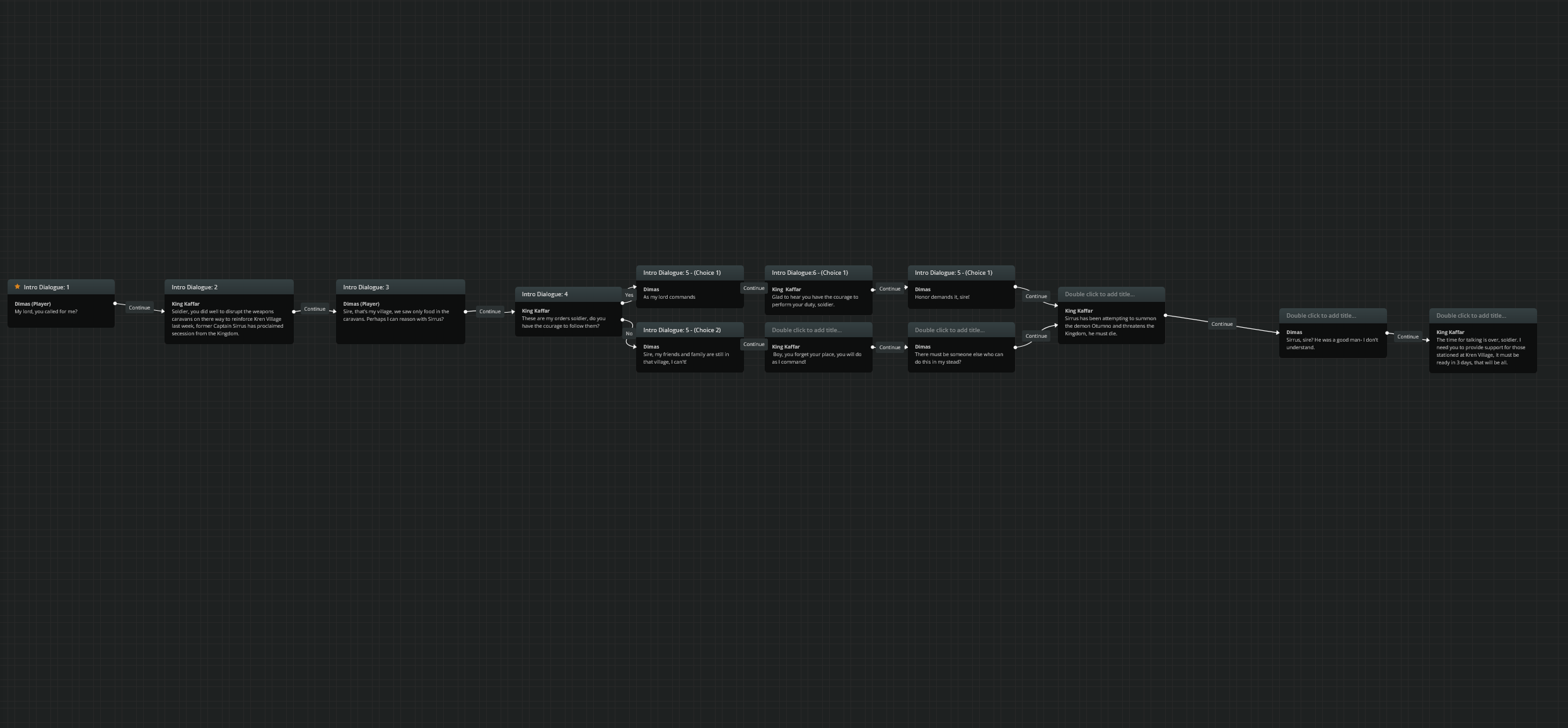
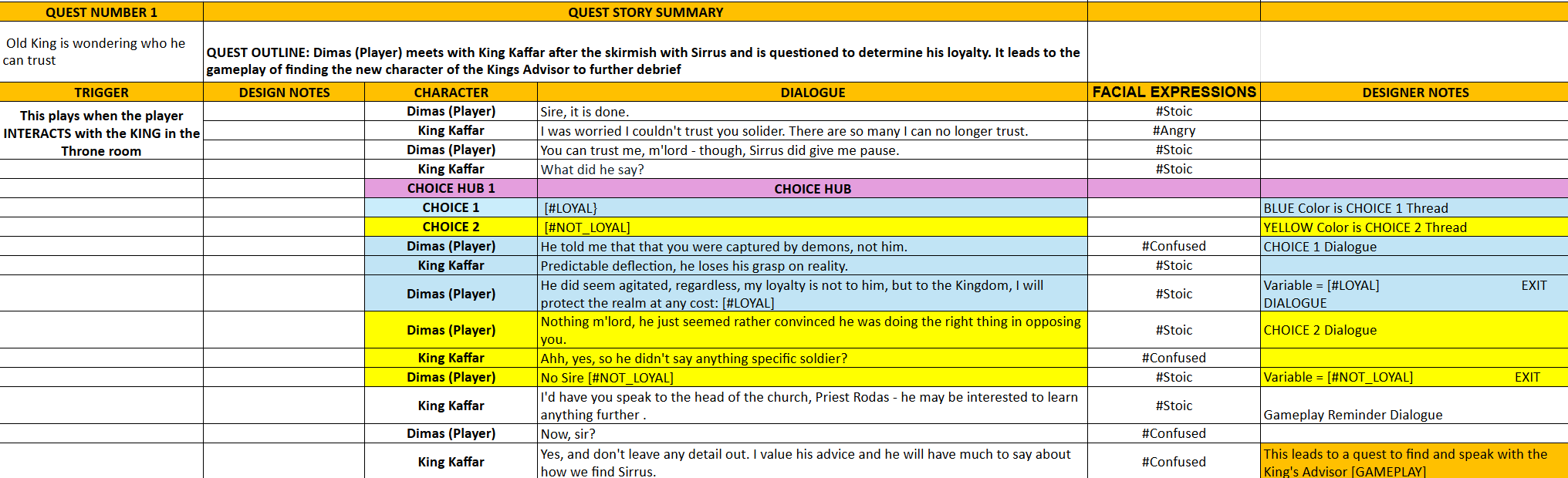
Quest Choice Dialogue — Interactive Prototype
Each quest begins with a clear objective but offers multiple paths to resolution. Player choice impacts both immediate outcomes and long-term relationships.
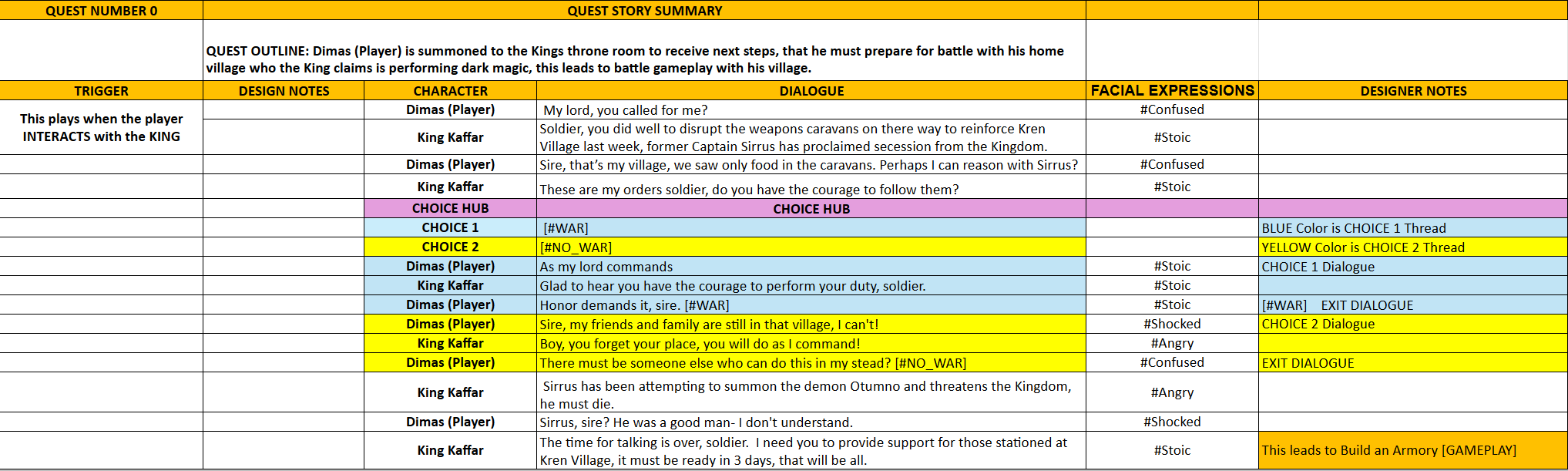
Using Arcweave, I designed dialogue trees that respond to player history, faction standing, and previous choices. No conversation exists in isolation.
Each character has a distinct voice derived from their background, archetype, and relationship to the central conflict.
Every great story needs collaborators. If you're building worlds that need voices, characters that need souls, or narratives that need structure—let's talk.
The best narratives aren't written—they're designed. Every choice, every word, every moment of silence is architecture.— John McKeown